Community Spotlight: Meet Kathryn Westland, MPH of Friendship Center Adult Day Care Center, Inc.
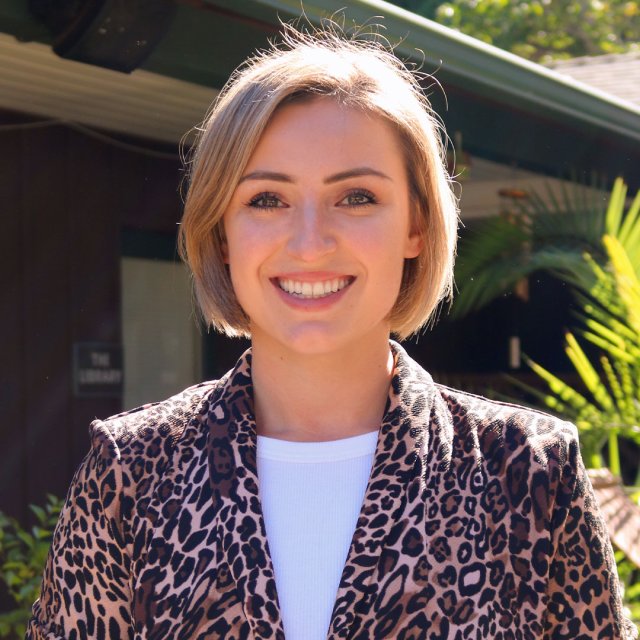
Kathryn Westland, MPH
Executive Director of Frienship Center Adult Day Care Center, Inc
Can you please share more about yourself and the mission of Friendship Adult Day Care Center Inc.?
I am a gerontologist and public health professional by training, and I’ve spent my career thus far working at the intersection of aging, dementia care, caregiving, and community health. I hold a Master of Public Health, and I’m particularly interested in ethnogerontology: how culture, socioeconomic circumstances, family structure, identity, and community shape the way we experience aging and caregiving. That lens has really influenced the way I think about leadership and about the role organizations like Friendship Center can play in a community.
My connection to dementia care is also deeply personal. I was a family caregiver for my grandfather, who lived with Alzheimer’s and vascular dementia, for 13 years. That experience gave me an early understanding of how profoundly dementia affects not only the person living with it, but the entire family and network around them.
I first joined Friendship Center in 2017 as Program Manager, working directly with our members and families. I later served as Director of Programs for the Alzheimer’s Association on the Central Coast before returning to Friendship Center in 2023 as Executive Director. Coming back to lead an organization where I had once worked directly on the program floor has been incredibly meaningful. I know our work from several perspectives; as a caregiver, a practitioner, a public health professional, and now as a nonprofit leader.
Friendship Center has served the Santa Barbara community since 1976. At our core is a simple belief: people living with dementia and other age-related conditions deserve to continue experiencing friendship, purpose, joy, dignity, and belonging. We provide social-model adult day services where older adults can spend their days engaged and connected, while their family caregivers receive essential respite, support, and education.
As we celebrate our 50th anniversary, I feel a tremendous responsibility both to honor what has made Friendship Center so special for five decades and to think ambitiously about what dementia care and healthy aging can look like for the next fifty. That means expanding access, responding to the changing needs of families, building stronger community partnerships, and continuing to make sure that high-quality care and connection are available regardless of a family’s financial circumstances.
Who has made a strong impact on your life and has helped you to get you where you are today?
There are so many people who have shaped me, but my family is really where it begins. My mother has had an enormous influence on who I am, particularly in my commitment to prioritizing quality of life for myself and those who I serve, maintaining independence, and a strong belief that if something matters to you, you figure out how to make it happen.
Professionally, I also have tremendous respect for my predecessor at Friendship Center, Heidi Holly, who led the organization for 38 years. There is something extraordinary about being entrusted with an organization that someone else devoted nearly four decades of her life to building and protecting. I learned from her that leadership isn’t simply about growing an organization; it’s about understanding what is sacred about it, preserving that integrity, and then having the courage to help it evolve.
I think these two and the many other profound influences on my life show up in how I lead today and remind me of the responsibility that comes with being trusted to lead something that belongs to a community.
What are some recent highlights at Friendship Adult Day Care Center, Inc.? And what events, milestones and steps are in the near future?
This is an incredibly exciting moment for Friendship Center as we are celebrating our 50th anniversary this year while also experiencing one of the most dynamic periods of growth in our history. I love that juxtaposition; we have fifty years of experience behind us, but we are still asking ourselves what our community needs next and how we can do better.
Over the past few years, we’ve expanded our programs significantly. We launched the Friendship Center Healthy Aging Hub in Carpinteria, created a downtown Santa Barbara Memory Café, expanded our early-stage and small-group dementia programs, increased our caregiver support and education, and launched our own transportation program to help address one of the biggest barriers that families face in accessing care. At our Montecito campus, we’ve also expanded our hours and made significant improvements to the physical space so that it better reflects the quality, dignity, and warmth of the care happening inside it.
It has also been a wonderful year of recognition. In May, Friendship Center was named the 2026 Nonprofit of the Year by the Santa Barbara South Coast Chamber of Commerce, and this summer both the City and County of Santa Barbara recognized our 50 years of service. Our second annual Summer Polo Soirée in July was another joyful success and brought together an incredible group of friends and supporters of our mission.
Now, we’re channeling the momentum of our 50th anniversary into what comes next. On September 26, we’ll host our inaugural Dementia Care Conference, bringing leaders, professionals, researchers, caregivers, and advocates together in Santa Barbara to explore what better dementia care can look like. The following day, we’ll hold our first Friendship Center Family Reunion, inviting the generations of families, staff, volunteers, Board members, and friends who have shaped this organization to come home and celebrate together.
For me, our 50th anniversary is as much about looking forward as it is about looking back. We want to honor the people who built Friendship Center by making sure we are still here, still relevant, and still responding creatively to our community for the next fifty years.
What about Friendship Center Adult Day Care Center, Inc. is special to you, what would you like our readers to know?
Friendship Center is home to me. I first joined this family fresh out of graduate school in 2017, and even after leaving for a few years to grow professionally, I eagerly found my way back. There is something about this place that stays with you. We see it with former staff who return to volunteer, families who remain connected long after their loved one has stopped attending, and even former staff members who, years later, have come back through our doors as members themselves. There is a real sense that once you are part of Friendship Center, you are always part of the family.
What I wish more people knew, though, is just how much joy exists here. Dementia is a devastating condition to experience, and so much of the conversation around it understandably centers on loss. But a person living with dementia is still a whole person. They can make friends, laugh until their stomach hurts, dance, flirt, create something beautiful, feel useful, and have a genuinely great day. We get to witness that every day, and I think it is one of the most special things about our work.
I also want families to know that Friendship Center is here for them, too. Caregiving can become incredibly isolating, and no one should feel as though they have to figure it all out alone. Sometimes people think coming to an adult day program means they’ve reached some sort of final stage or that they can no longer manage on their own. I wish we could change that perception. Friendship Center can simply become another part of your village; a place where your loved one has a community of their own, while you have the space and support to continue being their family member, not only their caregiver.
After nearly fifty years, I think that sense of belonging is still the heart of Friendship Center: people taking care of people, and making sure everyone has a place where they are known, valued, and genuinely happy to be.
Why did you think it was important to become a member of the CNL? What do you value most about your connection with CNL?
Becoming a member of CNL was an easy decision because I really believe that strong nonprofits require leaders who are willing to always keep learning. Especially stepping into my first Executive Director role, I knew there would always be areas where I had experience and confidence, and others where I needed to build new skills quickly. CNL has been an incredible resource for doing exactly that.
I have taken advantage of so many of CNL’s programs and trainings—from the Board Leadership Institute and Accounting Bootcamp to currently being part of the inaugural cohort of the Nonprofit Adaptability Lab, along with many workshops and learning opportunities in between. What I value most is how practical the education is. I can attend a training, learn from someone with deep expertise, hear how other nonprofit leaders are approaching the same challenges, and very often bring something back to Friendship Center that we can actually put into practice.
I also really value having access to expertise in areas where, as nonprofit leaders, we aren’t expected to be specialists but still need to make informed decisions. An Executive Director touches everything, governance, finance, human resources, fundraising, strategy, operations, communications, and having a trusted local resource where I can continue building my knowledge has been tremendously valuable.
How can the community support you? Where can they find you on social media?
There are so many ways the community can support Friendship Center, but one of the most important is through philanthropy. Friendship Center operates a highly unusual model: we do not receive ongoing government funding to subsidize the cost of care, yet we maintain a true sliding scale that extends all the way to full tuition assistance. No one is turned away simply because they cannot afford our services.
The actual cost of providing a full day of high-quality dementia care is more than $200 per person, while the families we serve pay, on average, less than 30% of that cost. The difference is made possible by the generosity of our community. When someone makes a donation to Friendship Center, they are quite literally helping a local family access care, helping an older adult remain connected and engaged, and giving a caregiver the respite they need to continue caring for someone they love.
I would also encourage people to support us simply by showing up. Attend our events, come to our Dementia Care Conference, learn about aging and caregiving, and help us create a community that is more informed and comfortable talking about dementia. Support your friends and colleagues who are caregivers. Learn what resources exist before your own family needs them. And if you know someone who may benefit from Friendship Center, please tell them about us. Sometimes making that connection is one of the most meaningful things you can do.
There are wonderful opportunities to volunteer as well. Our members benefit enormously from people in the community sharing their interests and talents, whether that means speaking with one of our early-stage groups, playing music, leading exercise, baking, gardening, creating art, or simply spending time in conversation. You don’t have to be an expert in dementia care to contribute something meaningful; you can simply bring something you love and share it with our members.
Ultimately, supporting Friendship Center means helping us build a community where aging adults and family caregivers are not left to navigate this journey alone. You can donate, volunteer, attend an event, learn alongside us, refer a family, or simply become a more informed and supportive neighbor.
You can learn more at friendshipcentersb.org and follow Friendship Center Adult Day Services on Instagram, Facebook, and LinkedIn: @friendshipcentersb
More
- Community Spotlight: Meet Kathryn Westland, MPH of Friendship Center Adult Day Care Center, Inc.
August 27, 2026 - Community Spotlight: Meet Gabrielle Vignone of House Farm Workers!
August 3, 2026 - Community Spotlight: Meet Bryan Yee of kidSTREAM Children's Museum
June 23, 2026 - Community Spotlight: Meet Jack Hinojosa of Child Development Resources
June 1, 2026 - Community Spotlight: Meet Molly Corbett of Livingston Memorial Visiting Nurse Association
April 30, 2026 - Community Spotlight: Meet Lana Clark of Conejo Schools Foundation
March 24, 2026 - Community Spotlight: Meet Esther Anaya of The Arc of Ventura County
March 3, 2026 - Community Spotlight: Meet Jill Shaffer of Alzheimer's Association
January 27, 2026 - Community Spotlight: Meet Brittany Avila Wazny of Teddy Bear Cancer Foundation
December 1, 2025 - Community Spotlight: Meet Niki Chopra Richardson of TOArts
October 27, 2025 - Community Spotlight: Meet Haley Ehlers of Climate First: Replace Oil & Gas 'CFROG'
September 23, 2025 - Community Spotlight: Meet Len Smolburd of Boys & Girls Club Greater Conejo Valley
August 28, 2025 - Community Spotlight: Dan Parziale & Mesa Farm
January 6, 2025In this interview with Dan Parziale, Executive Director of Mesa Farm, we learn about his professional journey that led him to work towards ending homelessness among young adults in Ventura County. Learn more about Dan, the work of Mesa Farm in Ojai, and how the Center for Nonprofit Leadership has played an integral role in his professional development and developing his leadership skills.
- Community Spotlight: Esther Anaya & The Arc of Ventura County
November 4, 2024 - Community Spotlight: Forrest Leichtberg & The Freedom To Choose Project
September 30, 2024 - Community Spotlight: Meet Sierra Doehr & Saticoy Food Hub
January 31, 2024 - Community Spotlight: Annika Sumby & The Samaritan Center of Simi Valley
October 31, 2023 - Community Spotlight: Meet Christine Cardona-Threadgill & Friends of Fieldworkers
September 22, 2023 - Community Spotlight: Meet Megan Raff & Santa Barbara County Food Action Network
August 30, 2023 - Community Spotlight: Meet Pamme Mickelson, Susan Weber and equi-centered
July 25, 2023 - Community Spotlight: Meet Anne Burdette and the Santa Barbara Urban Creeks Council
June 27, 2023 - Community Spotlight: Meet Stephen Watson and The Ventura Regional Fire Safe Council
May 30, 2023 - Community Spotlight: Meet Peggy White and OMG Women Outreaching Women (OMG W.O.W)
February 3, 2023Hear from Founder and CEO Peggy White as she shares about her life, her work, and her goals for her organization, OMG Women Outreaching Women (OMG W.O.W).